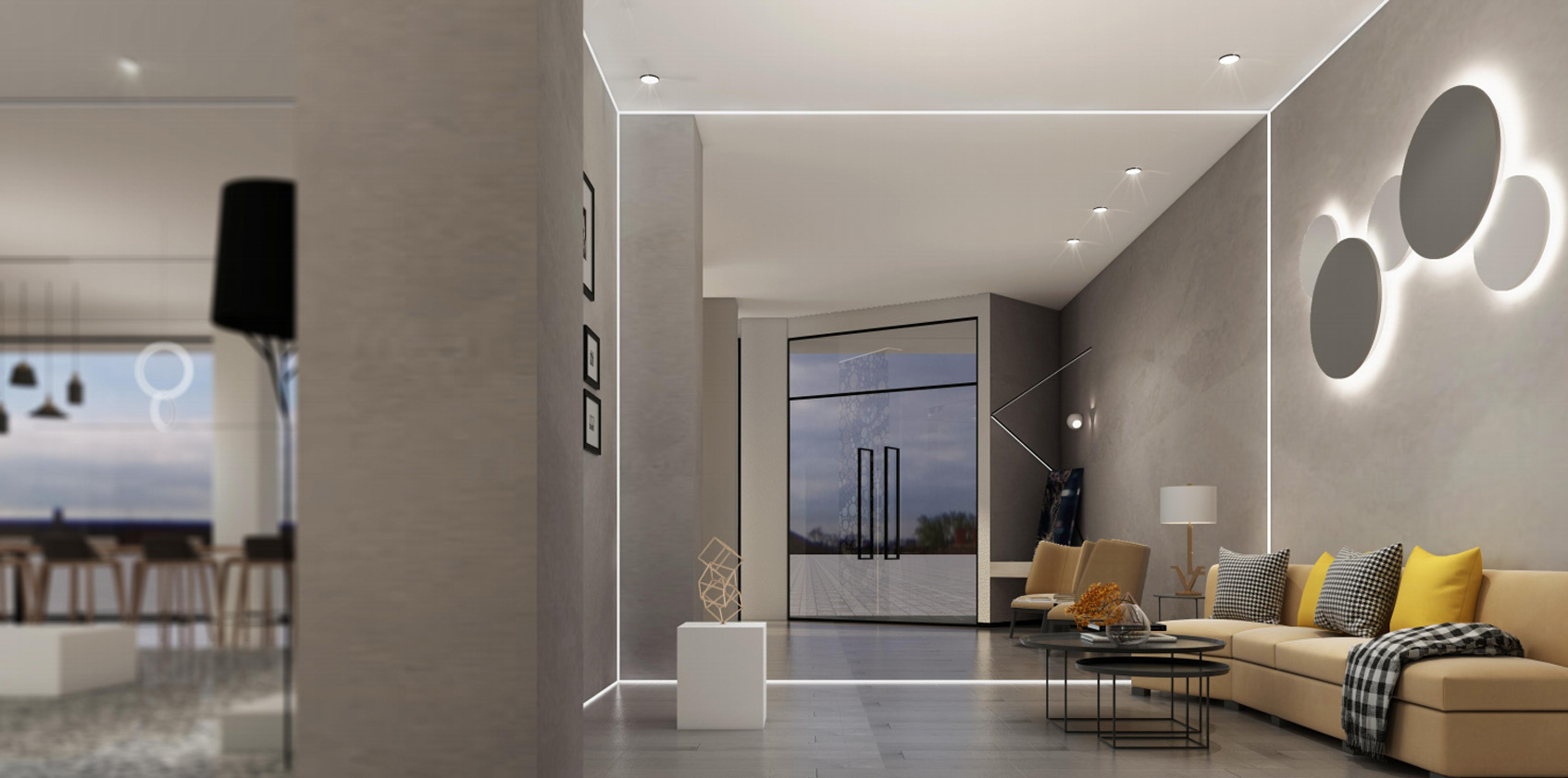
With the development needs and trends of cities, an increasing number of contemporary commercial complexes are being built. Commercial buildings serve as the commercial centers of modern cities, including shopping plazas, commercial centers, office buildings, hotels, restaurants, and other commercial service buildings. So, how should we design the facade lighting effects of commercial buildings? The lighting design of commercial buildings is certainly not simply a matter of making them brighter or more elaborate. Its lighting design plan should be developed carefully and comprehensively, taking all aspects into consideration. Through an effective lighting design plan and proper implementation, commercial buildings can stand out in the nighttime urban landscape, creating beautiful, distinctive exterior facade lighting.
The lighting characteristics of commercial buildings are highly distinctive, mainly reflected in their diverse and systematic functions, favorable locations and relatively large scale, as well as complex, diversified traffic flows. Therefore, the lighting design of commercial buildings places greater emphasis on creating a commercial service atmosphere. In addition to various lighting projects based on the structural characteristics of the building itself, a variety of lighting methods can also be used. The appropriate application of dynamic lighting and colored light will become increasingly important for creating a warm atmosphere.
The urban nightscape lighting design of commercial service buildings is often highly flexible, pursuing a dazzling and colorful appearance that reflects prosperity and vitality. To create a strong commercial service atmosphere, the primary lighting methods and artistic techniques should be diverse and unconstrained.
In prosperous areas, the lighting design of commercial buildings should be more objective. The urban nighttime lighting of commercial service buildings should be bright and colorful, but this is actually a misconception. Based on past practical experience, excessive use of colored and dynamic lighting methods can create an uncomfortable visual experience. Today, many large-scale building lighting projects use static exterior linear lights and monochromatic LEDs. As a result, the architectural lighting of the entire building creates a simple, attractive, and comfortable impression. The use of color must be appropriately determined according to specific circumstances. By combining it with the characteristics of the building, better solutions can be achieved in terms of lighting methods and color application.